Investing where members work
Discover how Brenan Place and the UNSW Health Translation Hub bring deep sector insight into our property portfolio.

Accessing these types of investments takes trusted partners, deep understanding of our members, and a strong investor reputation.
These investments also align with Sustainable Development Goal #3: Good Health and Wellbeing, and help support jobs and innovation in sectors that many of our members work in — alongside the opportunity to deliver promising financial outcomes for members.
Here are some examples of how HESTA invests in medical technology.
Developed and headquartered in Australia, Heidi is a healthcare technology company that is building an AI Care Partner, with a mission to double the world’s healthcare capacity by supporting every stage of care delivery. The technology suite helps doctors and nurses spend less time on paperwork and more time supporting patients. It includes:
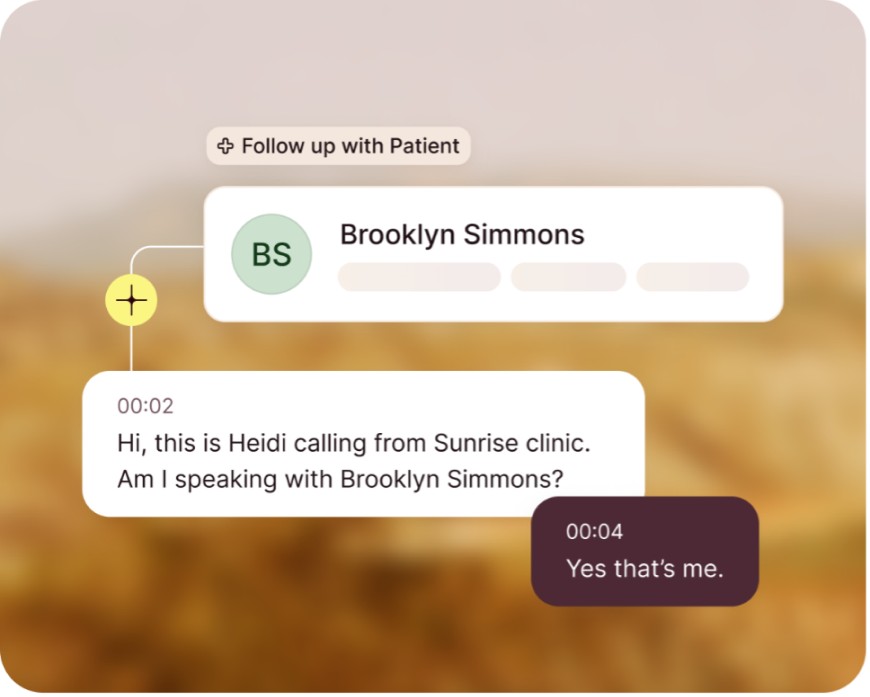
Clinical workflows worldwide are already being transformed for the better, with new data revealing significant time savings and efficiency gains for healthcare professionals. According to the company’s Australian Impact Report, 87% of users have reduced their overtime, with an average of 59 minutes of clinician capacity freed up per day.
Heidi has grown to support more than 2.7 million consults each week in 110 languages and 190 countries, and has saved clinicians over 60 million hours since launch.
We invest in promising companies like Heidi — alongside our trusted investment partner, Blackbird Ventures — that are developing the technologies and growth industries of the future. These investments aim to help us create value and drive long-term returns for our members.
HESTA is proud to be a long-term investor in EBR Systems, the inventors of WiSE, a new FDA-approved device for heart failure patients.
Around 64 million people globally live with heart failure, and while treatments exist, not all patients respond to them. For those who don’t, the options can feel limited and the future uncertain. That’s where EBR Systems’ technology offers something new.
WiSE is a leadless cardiac resynchronisation therapy (CRT) device, which helps resynchronize the contraction of the left and right heart (impaired in heart failure patients).
The device is about the size of a grain of rice – enabling it to be inserted inside the left heart, unlike traditional wired CRT devices.
It is wireless and can help eliminate issues associated with wire-lead pacemakers, giving hope to patients for whom traditional CRT has failed.
So what does that mean in real life? It means being able to walk up the steps of the MCG to watch the footy, play with grandkids in the backyard, or simply breathe easier while making a cup of tea. It’s not just about extending life, it’s about restoring the parts of life that matter most.
EBR Systems has gone from strength to strength with WiSE, receiving FDA approval in April 2025, followed by the first commercial implants in June 2025. With the US Medicare system including WiSE in reimbursement schemes in October 2025, it established a clear pathway to broad adoption of the technology for eligible patients.
We were an early investor in the company and its revolutionary technology, and our holding embodies our Total Portfolio Approach to investment. The opportunity arose from our close partnership with one of our external investment managers, Brandon Capital, one of Australasia's leading life science venture capital firms, and is the result of the close collaboration between our Unlisted Assets and Direct Equity teams.
In identifying promising companies and technologies, our commitment to investment excellence with impact encourages innovation while supporting long-term member returns.
Perth-based BioMedTech startup, OncoRes Medical, is helping to revolutionise cancer treatment. The company is developing a real-time imaging device that improves a surgeon’s ability to remove all cancerous tissue during breast cancer operations.
Through our investment with Brandon Capital, HESTA is helping to advance progress in cancer treatment. OncoRes Medical’s technology was developed domestically — a collaboration between the WA Department of Health, Harry Perkins Institute and the University of Western Australia— which helps grow the local biotech sector.
The device, Elora, was granted FDA Breakthrough Device Designation, which supports faster approval and commercialisation in the U.S. With the aim to substantially improve outcomes in surgery and reduce repeat operations for women with breast cancer, the potential for cost savings to health systems may help drive the commercial case of the investment.
OncoRes has also received a grant to explore how it can apply its technology to prostate cancer, potentially broadening its application.
Watch this video to learn more about the imaging device.
Discover how Brenan Place and the UNSW Health Translation Hub bring deep sector insight into our property portfolio.
Many retirees who receive the Age Pension don’t realise they can return to work without impacting their payments — up to a point – thanks to the Work Bonus.
Learn more about how we're working for real-world impact.